
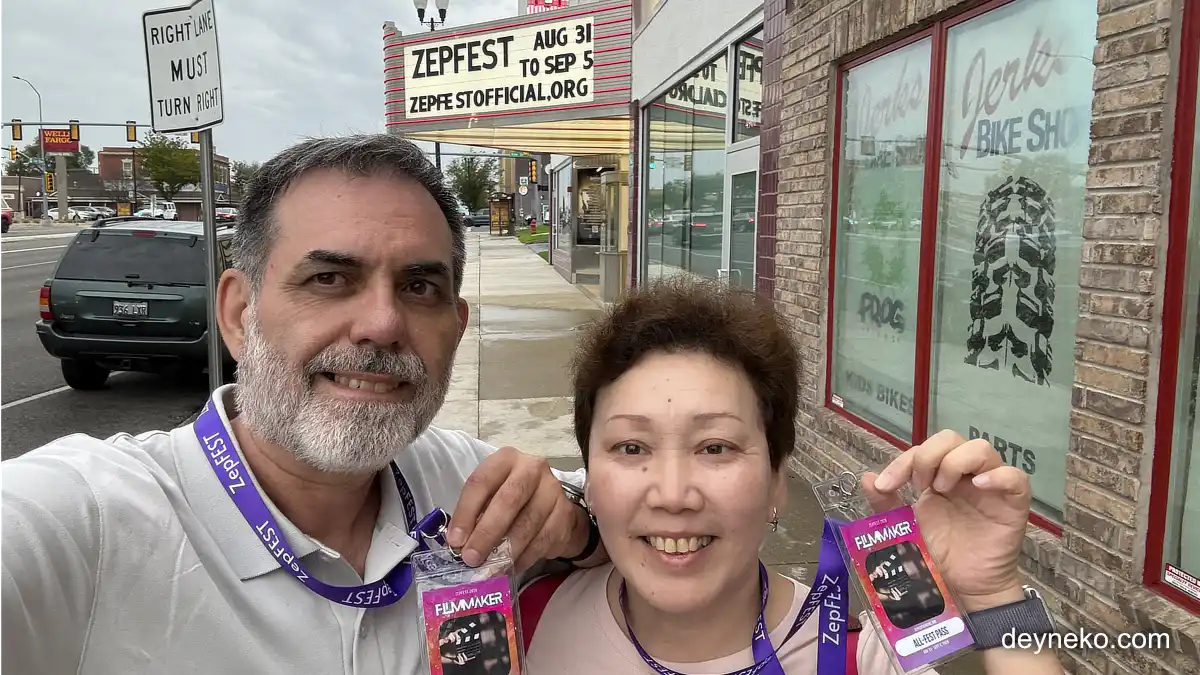
ZepFEST 2026 in Murray, Utah, was my first film festival ever — and our film was in its official selection. My honest impressions, as a first-timer.
Before that, I had only seen film festivals on TV. When Chasing the Sunset Whales was selected, my wife Alexandra and I decided to go and see what it is like. They say first impressions are the truest.
Cold start
Sunday in Murray: Did We Fly to a Village Festival?
ZepFEST takes place in Murray, Utah, a suburb of Salt Lake City. After arriving at the international airport of Salt Lake City we used Uber and in 30 min we were in the center of Murray at our hotel. The picture of Murray puzzled us. Streets in Murray were empty – No people, no cars! Empty and wide streets and absent supermarket or big groceries around our hotel reminded us of the industrial areas in the suburbs of Montreal. With this all impressions we ask ourselves, “Did we fly to a village festival?”.
The Battle for the Thermostat
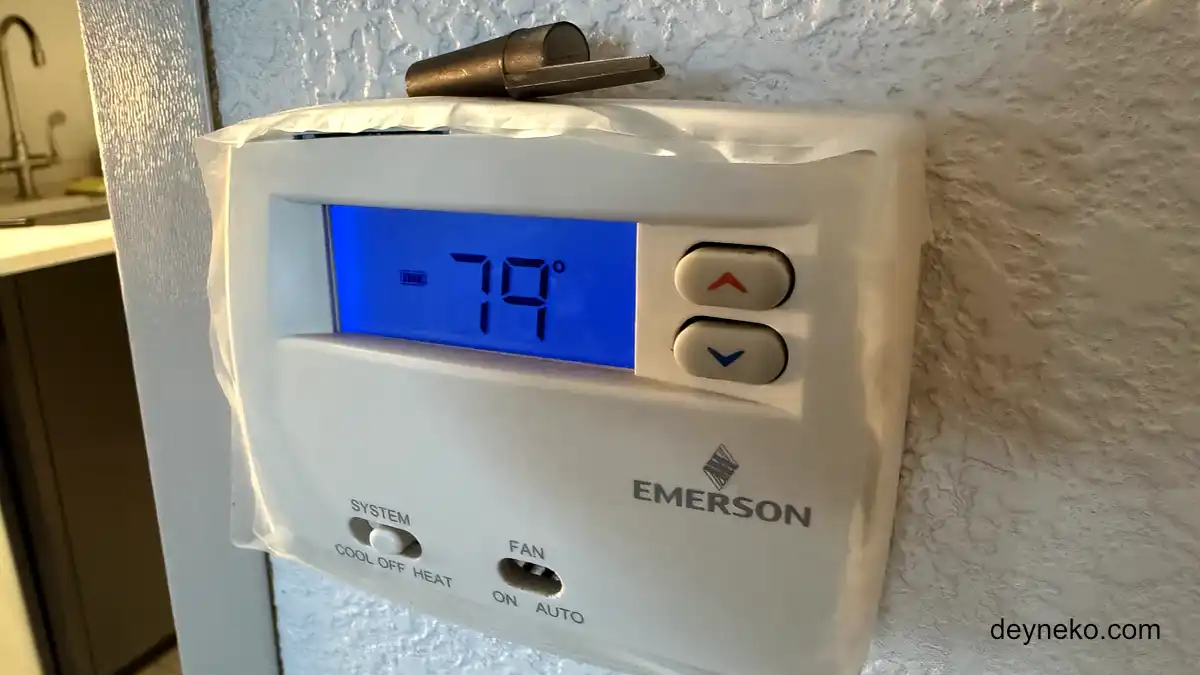
We stayed in Home2 Suites by Hilton, because it was close to all places where ZepFest take place and organizers offer us a discount. We were still getting over the sight of an almost deserted Murray when the next surprise hit us: we couldn’t fall asleep in our hotel room. The air conditioner worked non-stop. The problem was not only with the temperature, but with constant noise, because the air conditioner was installed near our bed. I went to the front desk to get the problem fixed.
And that was when we began to get a feel for the people of Murray. The young woman working the front desk immediately joined our little battle with the thermostat. We checked it and discovered that it had no batteries. She ran downstairs to find some and came back a few minutes later. Then we discovered problem number two: the thermostat cover was broken, so the batteries would not stay in place. I suggested Scotch tape, so we went downstairs again to find some. We taped the batteries in place, and she gave me a pen cap to operate the broken fan switch.
Our newly invented Pen-Cap Fan Switch worked perfectly. The air conditioner kept running with our improvised repair for the entire week we stayed there.
Home2 Suites by Hilton Salt Lake City-Murray.
The Heat Is On
Signs of Life
ZepFEST headquarters turned out to be a tiny, decidedly modest little house. Out on the sidewalk, a hand-lettered sign gave directions with true rural economy: “FESTIVAL THATAWAY.” And “thataway” we went, bright and early on the morning of August 31, 2026.
Despite outside the small HQ was very quiet, we were surprised that inside was crowded and busy. “We’ve come from Montreal,” I began. “Our film is screening here. It’s called…” I went on, slowly and a little uncertainly, “Chasing the…”
“…Sunset Whales,” a woman finished for me. “Hi, so glad you’re here! I’m Alicia Farmer.”
It was lovely to discover that the festival’s founder and director already knew our film.
Until then, Alexandra and I hadn’t been sure whether we’d need to pay for a second pass. Alicia handed us two All Fest Pass badges, each proudly bearing the word “Filmmaker,” and said, “You both have full access to every festival event.”
That was the moment our cold start became a thing of the past. The streets of Murray were no longer empty: people and cars had appeared. When we went for a walk in lovely Murray Park, we were surprised that everyone greeted us. The first couple of times someone said hello, I asked Alexandra, “Do you know them? Maybe they’re from the festival?” “No,” she said. Just like the kind woman at our hotel during the Battle for the Thermostat, that’s simply how people are in Murray.
Six Venues, Two Pairs of Legs, and the Utah Sun
ZepFEST took place across six venues:
- ZepFEST HQ — yes, that tiny house
- Murray Theater — a movie theater
- Murray Library — the local public library
- Murray Armory — a small hangar-like hall with glass walls
- Ice Haus — a local bar
- Murray Park — the city park, home to a single event
If the festival began with a cold start, what followed was hot in every sense of the word.
During the festival, we mostly walked between four venues. The problem was that they were too close to bother calling a taxi or an Uber and waiting for it, but far enough apart to make walking in 30°C+ (86°F+) heat a real challenge. From our hotel to Murray Library, for example, was 0.8 miles (1.3 km), and from the library to Murray Theater another 0.7 miles (1.1 km). We noticed that other guests without a car were walking too.
The ZepFEST program was genuinely interesting, and every day we planned which events to attend and which films to see. Quite often one event ended just as another began somewhere else, so we had to walk fast. And yes, it was hot!
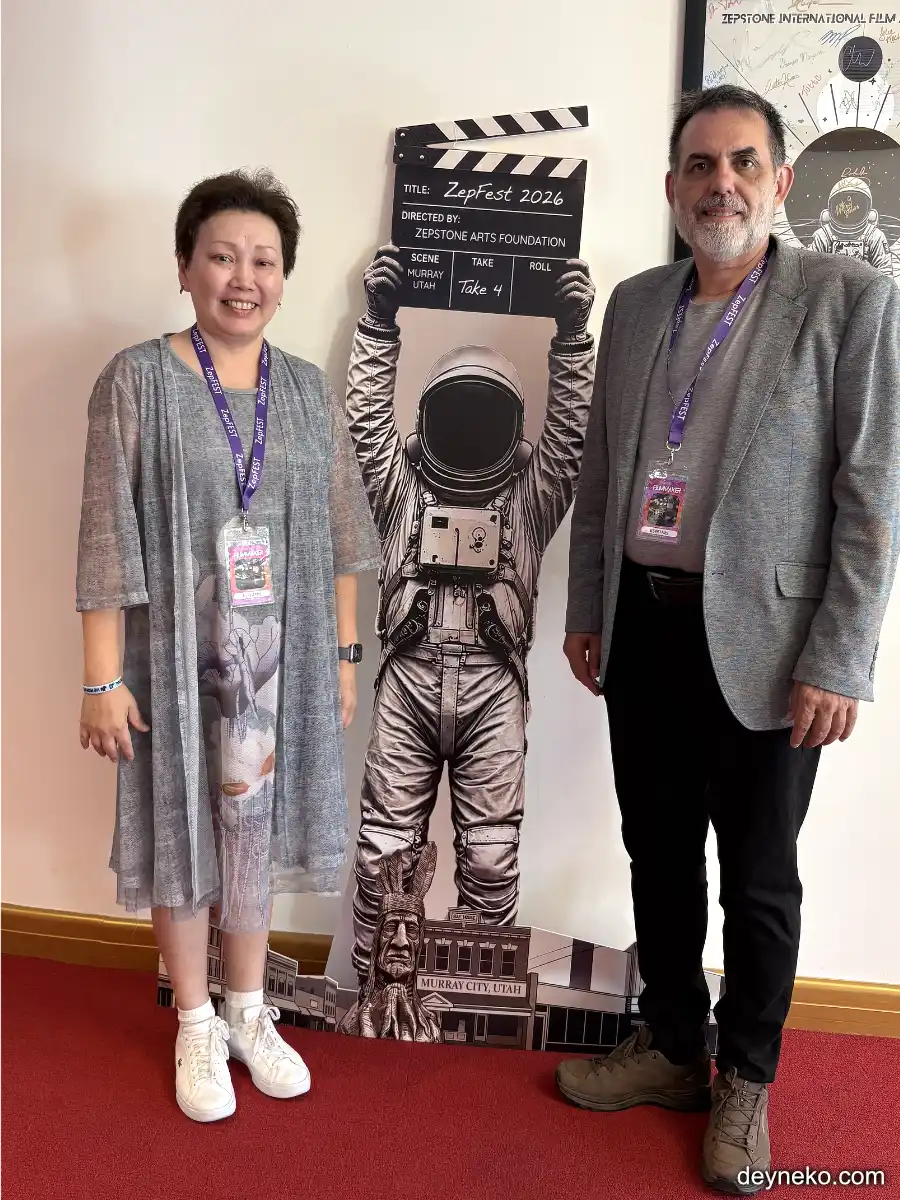
Murray Theater sat roughly at the centre of it all. We learned that it was a historic movie theater built in 1938. I can only imagine how modern and grand it must have seemed back then, when audiences came to watch the latest black-and-white films.
Film Festivals Are Just About Watching Films, Right?
If you are expecting me to start describing film after film now — because, after all, this was a film festival — you are wrong. As I said at the beginning, ZepFEST was the first film festival I had ever attended.
Like many people, I imagined film festivals as places where they show movies almost all the time. What I found in Murray completely broke that stereotype for me.
There were workshops, educational sessions, meetings with filmmakers, discussions, and plenty of opportunities to exchange experience. I had not even dreamed of that. At times I felt like a kid in a toy store — I wanted to see everything!
Of course, we watched films too. But whenever there was a session where I could learn something useful from people who actually make films, I wanted to be there. That is why Alexandra and I were literally rushing from one venue to another.
And apparently, this was not accidental. ZepFEST director Dr. Alicia Oberle Farmer described this part of the festival very clearly:
Peer-to-peer learning, hands-on learning, and multicultural learning are all part of it.
— Dr. Alicia Oberle Farmer, ZepFEST Director, Murray City Journal, April 2026.
We attended as many workshops, panels and masterclasses as we could, and below I share the most valuable things I took away from ZepFEST.
Hard work beats talent when talent doesn’t work hard
Workshop: Local talents, Global Voices: The modern Voiceover Landscape
Isaac Nelson & Stephan Watson
When I was heading to this workshop, I thought it would be mostly about voice-over techniques and technical issues — sound setup, microphones, maybe some numbers and specifications. I’m not planning to become a professional voice actor, but from time to time I still have to record voice-over for my films, so I thought this information might be useful. The workshop turned out to be far broader, and far more interesting, than I expected.
Isaac and Stephan talked not only about types of voiceover, microphones and equipment, but also about voiceover as a business, where to find auditions, competition and other challenges that a beginner will face.
They warned beginners that they would face criticism and rejection — and sometimes be treated like ghosts, as if they didn’t exist. Most of the time, they wouldn’t even know why they hadn’t been chosen. If you’re determined to become a voice actor, keep going.
Just wanting to be a voiceover actor is not enough, even if you have talent. Can you imagine a basketball player who does not train regularly? It’s the same with voiceover.
Patience and persistence is key… Patience and persistence make way more voice actors than flat talent.
– The modern Voiceover Landscape Isaac Nelson & Stephan Watson.
And that’s not all. Isaac and Stephan strongly advised letting people know that you are nice and easy to work with. On social media, everywhere, you should create an image that makes everyone understand it is a pleasure to work with you.
I’m not planning to become a professional voice actor, but from time to time I still have to record voiceover for my films. I don’t like my accent, so I asked how to improve it. To my surprise, I was told, “I like your Russian accent.” The message was clear: I don’t need to change my voice or imitate someone else’s, just polish it. Moreover, times have changed, and the “golden voice” is no longer in fashion. The next session showed how different things were just a few decades ago.
Theatre of the Mind: Voiceover with Christopher Robin Miller
Christopher Robin Miller shared an incredible story from his early career. He had always wanted to get into voiceover. Nowadays, almost anyone can buy the equipment needed to record their voice at home. But back then, things were different. You needed training, a professionally recorded demo, and access to a recording studio. Miller couldn’t afford all that. But he could afford to show up at the KLC talent agency five days a week and tell Linda Behrman, a voiceover talent agent, that he wanted to do voiceover. And he did that for six months!
Finally, Linda banged her desk and said, “You know what, that’s fine. You’re not even right for this. Here’s an audition for you. Go away.”
He went to the audition and got the part! That was the beginning of his voiceover career.
But if you think his persistence was the only reason he succeeded, you’d be wrong. By the time he got that audition, Miller already had about twenty years of experience in theatre. He knew how to perform, take direction, and make bold acting choices. He got the part not simply because he kept bothering an agent, but because he had spent years developing the skills he needed.
What started as a workshop turned into a genuine masterclass.
Miller invited five volunteers onto the stage and asked them to repeat the same phrase while changing their gait (the positioning and movement of the lips, tongue, and jaw), pitch, placement (where the voice resonates), dialect, and attitude. We saw how these five elements could create completely different character voices. The same ordinary introductions gradually turned into completely different characters.
Miller called his approach “disciplined mischief.” Five adults playing with their voices almost like children playing make-believe — except that behind all the fun was a method that allowed them to understand what they were doing and, more importantly, do it again.
Mind Gymnastics in a Talent Gym
ZepCOMMS: Writer’s Gym With Jacob Milstein
All my life I drew exam tickets. In the USSR, and later in Russia, we had a system where you picked a piece of paper with your exam question: the exam ticket. I had this in school, in medical college and later at university. And here I met this system again, but in the USA, in Utah! One of my last exam tickets in Russia read: “Describe modern methods of surgical hand preparation.” In Utah, the topic was absolutely different…
Jacob Milstein, musician and screenwriter, set up an exam in creativity for us. Each of us drew a folded piece of paper with a hidden topic. Then we had about one hour to write a script, a poem or an essay.
You can see my “exam ticket” in the picture below.
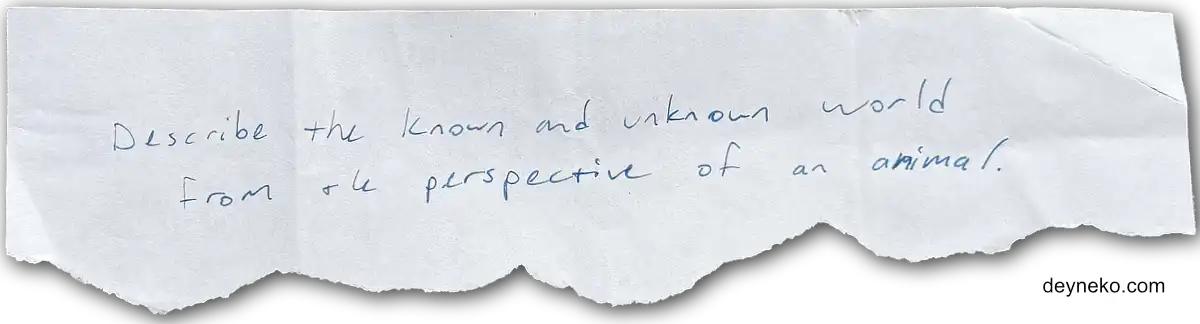
My topic was: “Describe the known and unknown world from the perspective of an animal.” Then we all started writing, and, unlike back in high school, nobody even tried to copy off their neighbour: everyone had a different “exam topic” anyway. The air was thick with creativity. In about one hour I wrote a script for a short film. The script turned out so impressive that we are now seriously thinking about making the film!
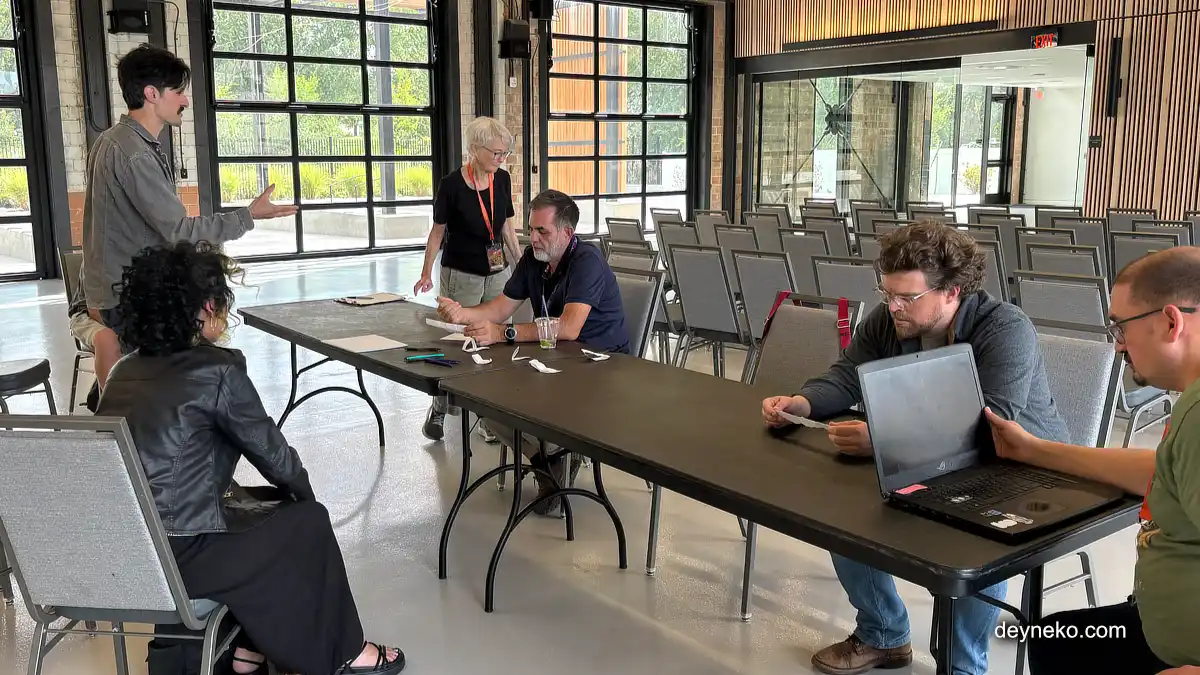
Talented and creative people were all around me. They wrote two poems and an essay.
It shows that in an atmosphere of creativity and goodwill, wonderful things happen. I would recommend coming to the festival just for events like this.
Inner Child Storytelling workshop with Kelley Lord
They say Freud sells better. We’re used to being asked to revisit our childhood to find the roots of our present-day problems. It has become kind of a routine to look for problems in the past and blame them for our current ones. Even in cinema there is a cliché: a psychologist asks a patient to go back to childhood, and the patient sees a childhood nightmare. Christina Bethell and colleagues* note that we know much more about the consequences of problems in childhood than about the positive things.
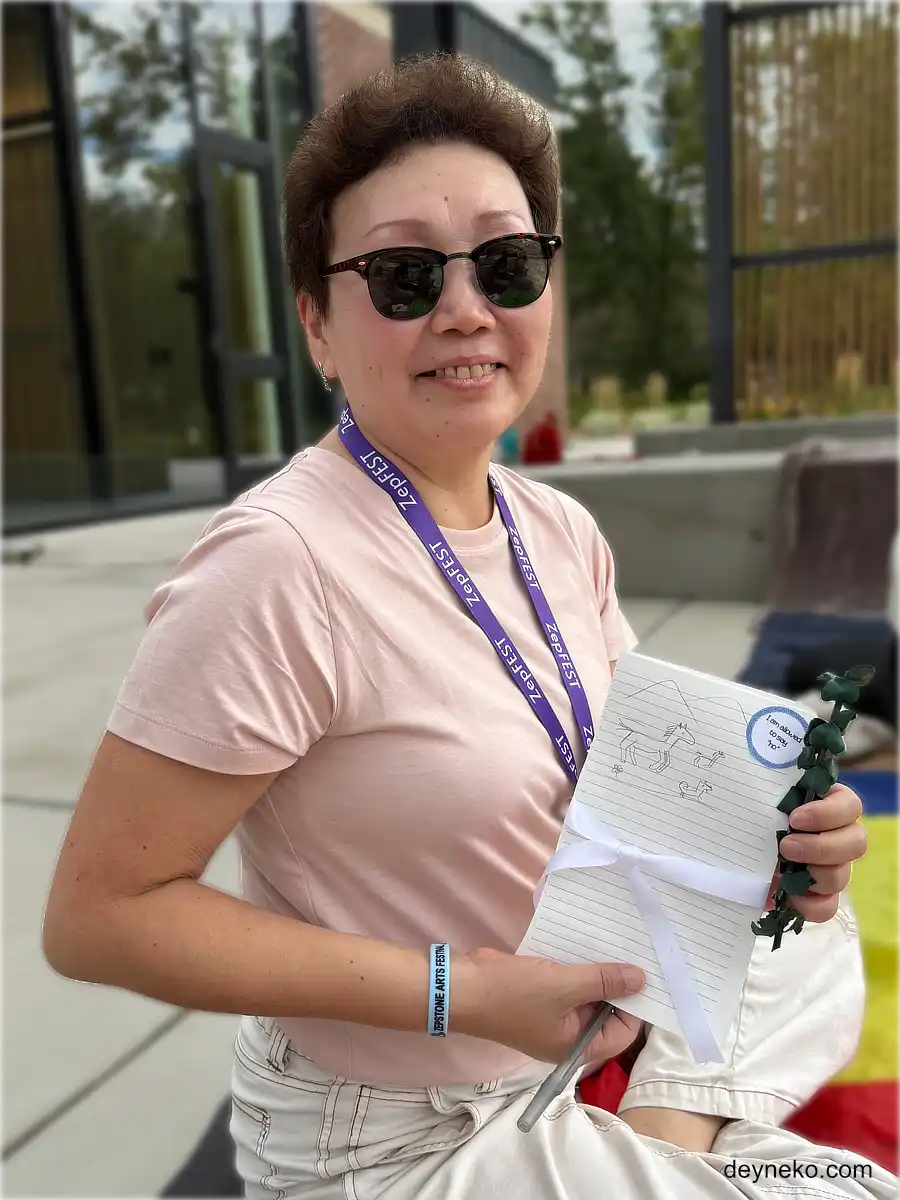
Alexandra Deyneko after the Inner Child Storytelling workshop, holding her sketch of a childhood memory: nature and horses in Siberia.
Actor, writer and Emmy-winning producer Kelley Lord asked us to immerse ourselves in our childhood and recall moments when we felt good. You know what… I liked it. To my own surprise, I recalled moments of my childhood with my grandfather and grandmother. Alexandra, who grew up in far Siberia, recalled nature and horses.
After the workshop I had a nice feeling. I think we need more workshops like this.
* Bethell C, Jones J, Gombojav N, Linkenbach J, Sege R. Positive Childhood Experiences and Adult Mental and Relational Health in a Statewide Sample: Associations Across Adverse Childhood Experiences Levels. JAMA Pediatr. 2019;173(11):e193007. doi:10.1001/jamapediatrics.2019.3007
Different strokes for different folks
At his Anatomy of a Score session, Joshua Sohn shared a lot of interesting and useful things, but above all he made it clear that music, and art in general, is very subjective. He demonstrated it with his own experience: he once wrote two different scores for one film, and the first one was rejected. He showed us the same short scene twice, each time with different music, and asked which one we liked more. It was a parody of the famous film Forrest Gump. Alexandra and I chose the same version without hesitation. And then he told us: the client chose the other one.
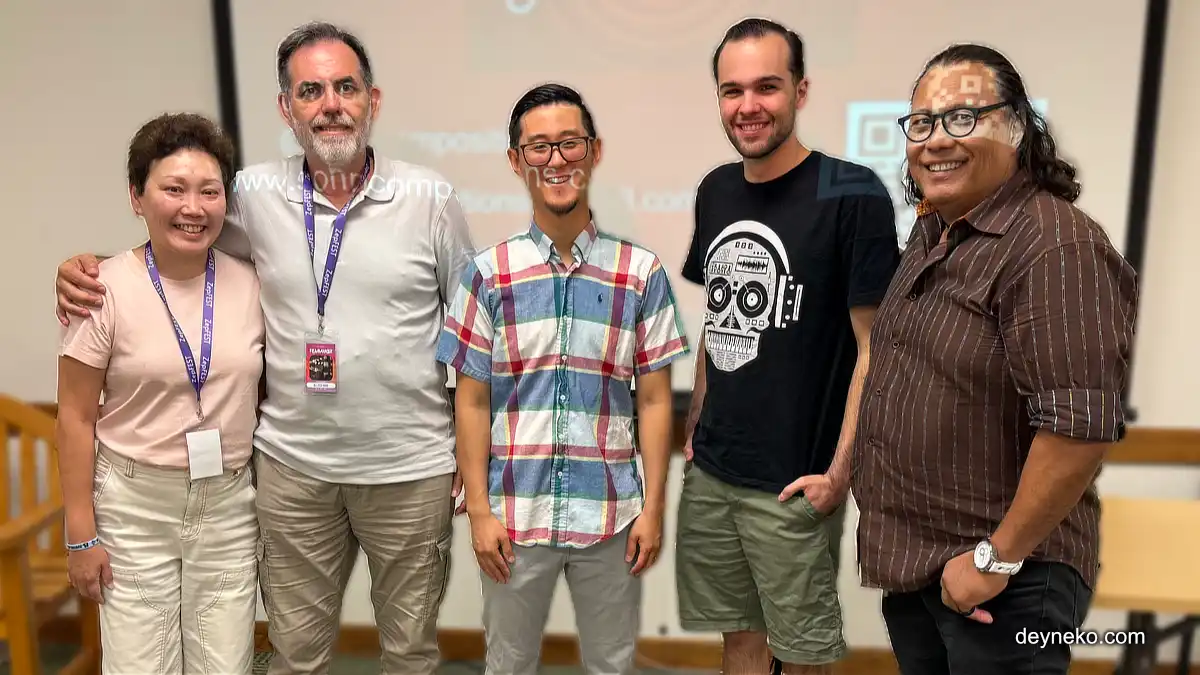
Anatomy of a Score session with Joshua Sohn, ZepFEST, Murray, Utah.
Some of us remember waiting a long time to watch a film that had won many festival awards, only to be disappointed and think: “What did they find in this film?” Festivals evaluate films in different categories — directing, acting, cinematography, editing, music and so on — but there is no guarantee that we will like the film.
A Quiet Man by James Loveland was having its world premiere and had already won ZepFEST’s quarterly Best Feature Film award, so of course we went to see it… We sat there, trying our best to follow the story, telling ourselves that maybe we just didn’t get it… but in the end we gave up and left.
And there was the opposite situation. One day, Alexandra and I walked into the Murray Theater and found out that it wasn’t the film we wanted to watch. It was Violent Butterflies, and moreover, it was in Spanish with subtitles. We decided to stay a little longer before leaving, just to be polite. But we couldn’t leave… the film drew us in. The wonderful acting, the story, the scenes — we were completely immersed. We were there.
It was a surprise to us that Violent Butterflies was nominated in 11 categories and won only Best International Film – Feature. Anyway, I really recommend watching this film.
Like the films, some of the events at ZepFEST were far from what I expected.
The description of Capturing Icons: Interview & Portrait Masterclass with Deverill Weekes & Martin Pearson was: “…Bring your notebooks, bring your cameras, and learn how to capture the icons of tomorrow.” Despite a small part at the end with some practical suggestions, the main part of the event, to put it mildly, wasn’t a masterclass. I think it was memories of the old days and a clear advertisement of their book.
Recognising Narcissism: Exploring Creativity as Healing, led by Juliet Landau, left me with mixed feelings. The psychological vulnerability of creative people is a very important topic. At ZepFEST, Brian Higgins touched on this area in his workshop The Art of Mental Health Awareness, and Isaac Nelson and Stephan Watson said in their workshop that support is very important, and that it takes just one person to put out your flame. Recognising Narcissism felt very simplified to me — maybe because I have a medical degree? By the way, they drilled us on narcissism for USMLE Step 1. Anyway, I would be very careful about drawing conclusions about people and giving them advice.
How Could We Not Talk About AI?
R.L. Lyone and Michael Ferrara presented The AI Elephant in the Room: Navigating the Future of Artistry in a Modern World, a panel dedicated to AI in filmmaking. I will share with you some controversial thoughts from this event.
R.L. Lyone said that AI can help a 60-year-old storyteller from Yemen whose salary is about 356 USD, or that AI will help a woman from Afghanistan who uses her father’s computer night after night because she was not allowed to enter film school… Well, I fully agree with R.L. Lyone that AI, as a great tool, can help us create a Martian landscape or a biblical army of thousands of singing angels, but I am not sure that AI will help a film by an unknown person from Afghanistan or another developing country reach the big international screens.
You know… we’ve been here before. In 1991, Francis Ford Coppola said: “some little fat girl in Ohio is gonna be the new Mozart”. A little bit later we got smartphones that can record video, and Sean Baker even made his Tangerine on an iPhone, but nothing changed.
Gatekeeping, described by Kurt Lewin, will exist forever. In my humble opinion, gatekeeping in filmmaking includes funding, production, festival selection, distribution, cinemas, and streaming platforms with their algorithms. AI can help with the first two gates but cannot help with the others.
I will end this eternal and boring topic with a famous saying from around 500 years ago:
Any one comparing the present with the past will soon perceive that in all cities and in all nations there prevail the same desires and passions as always have prevailed.
— Niccolò Machiavelli, Discourses on Livy, Book I, Ch. 39 (c. 1517; trans. Ninian Hill Thomson, 1883)
In the second part of the panel, we watched a short film by Michael Ferrara, The 18th hole, created fully with AI. Personally, I have a strange phenomenon: I noticed that I can watch AI films only for a limited time. In the first minutes my brain tries to evaluate the characters on the screen, and then it kind of gets tired. I remember when I started my medical career as a pediatric orthopedic surgeon, at some point I had a lot of kids in my outpatient clinic with pain in their feet and lower legs. At first I didn’t understand what was going on. Later, to my surprise, I found that all of them wore the same Chinese shoes. These shoes had very soft soles, and the kids’ feet and brains kept trying to find firm support, which caused muscle tension and pain. I think my mind experienced something similar with AI films. It tries to evaluate a person on the screen: “Yes, there is a man, let’s start evaluating his emotions, speech and non-verbal gestures… well, something went wrong, I’ll start again…”. Yes, the sound is OK, the picture is at least not bad, but my brain doesn’t accept it. Maybe in a couple of years AI characters, including their speech, will be indistinguishable from real people, or my brain will get rewired… but for now, my brain is not ready.
It is interesting that on this panel the filmmakers let us know that AI can replace everything in the future. But Isaac Nelson and Stephan Watson in their workshop have a somewhat different opinion. They agree that AI will replace some jobs in filmmaking, but they told us about a multi-million-dollar AI initiative for voice-over that flopped.
… And the consensus is AI just cannot get where human voices are. And it just seems that that’s just going to be how it is…
– Isaac Nelson and Stephan Watson, Local Talents, Global Voices: The Modern Voiceover Landscape
What do you think about the role AI will play in the future of filmmaking?
Our Film Played in a Bar
Our short film Chasing the Sunset Whales was screened in a bar along with other documentary films. At first we were skeptical, but when we came to the bar, we changed our minds. The bar, called Ice Haus, has all the necessary equipment for watching films. It is divided into two big spaces: one is a regular bar, the other has a stage, a projector with a big screen, large TVs on the walls and seating for the audience.
Video transcript
Alexander: I am a pilot. This is my hobby. I have all the equipment for… for aerial video recording. And we used two Insta360 cameras. Insta360 X5. Or Insta360 X3, I don’t remember. One camera was installed on the left strut. On the right, a GoPro facing forward. It recorded the view ahead. And in the cockpit, we installed another one.
We recorded sound with a Zoom H4, H4 for the intercom. Because in the plane, you cannot hear anything. It’s like… it’s noisy. And then we just synchronized all three cameras, with ambient sound and intercom audio.
Audience: And what is the plane?
Alexander: The plane? It’s a very good question. Because… we actually work in northern Quebec, as a mobile clinic. We have a private clinic, and… a community invited us to work for a month. And… my wife, Alexandra, she’s here. Filming, yeah. She’s like… yeah, boss of whale spotting. And… she wanted to see whales.
Usually, people use boats. But I like aviation, so we were like… okay, let’s do it by plane. I wasn’t sure… would it be good or not? But then I saw… it was a Cessna 170. It’s a really, really classic Cessna. Yes, we’re going.
I’m not super new to video. But… my previous videos were… like… for medical field professionals… and… instructional… you know… surgery… something like that. But this is the… we try to test it. And… at present time… we have… three projects in our… in our heads. To… rethinking… to do… not to do…
Audience: You should do it.
Alexander: Yeah. Thank you.
Nine people (not counting us) attended the documentary screening. And they were not armchair critics. Most of them were filmmakers, and as you can see in the video above, the questions came from people who know the craft, for example about special equipment for recording video and audio in flight.
Was our short the best documentary of the screening? Honestly… Alexandra and I don’t think so. There were a couple of films that were stronger than ours. Still, that wasn’t the end of it: the screening helped us connect with other filmmakers. When we met on the following days of the festival, we already knew each other, so we talked and discussed films. The festival really brings like-minded people together.
We Thought We Were the Only Fools Doing This. We Weren’t.
So, it’s time to tell you about the most valuable thing I found at the festival! For most people, the film industry is associated with a lot of money, rich actors, limousines and millionaires. I will reveal a secret to you: it is not always like this. Believe it or not, a lot of people make films out of passion! When you make a film in isolation and don’t see anyone like you around, slowly you start to think that you are a fool. It kills any desire to create. At ZepFEST I met a lot of independent filmmakers. When you see filmmakers like you around, it inspires you to create.
Make films with your friends
At the panel Rebel with a Skeleton Crew: How We Made a Feature Film for $9,000, I met the folks from New Ogden Cinema. They showed how to make a film when the budget says no. First of all, they’re friends, and some of them are literally neighbors.
One day they decided to make a feature. They launched an Indiegogo campaign and shot for the moon: $60,000. Ryan McDonald was determined from the start that whatever money came in, they would make the movie with it.
“We did not nearly come to 60K. Some people, unfortunately, will just collapse their entire project and wait. Well, guess what? That five years will come and go and you’ve already moved on to another project. So do what you can with the resources you have. Just show up. Just make connections. Be intentional with your time.”
— Ryan and Brandie McDonald, Rebel with a Skeleton Crew: How we made a Feature-Film for $9000, ZepFEST 2026
They raised about $9,000, which left them roughly $51,000 short. So they trimmed everything they could, and it worked. Ryan explained that with 50 people on set it can feel like everything is perfect, because you have everything, but what ends up on screen just turns to crap. That’s why his philosophy is to lean it down as much as you can.
Their method is run-and-gun, or as they call it, “Run. Gun. Fun.”: a minimal crew, minimal setups, minimal takes. At times they simply grabbed someone from the crew and put them in front of the camera. Their grip, for example, plays a part in the movie.
They said independent filmmaking is a relationship business, all day, every day. So after the panel I came up to ask a few questions, and they were happy to explain everything in detail.
First, I had noticed a slight stutter in their camera’s zoom, the same problem I have. So I asked Brad Kendrick, their DP, about it. He knew what I meant before I’d finished the sentence, and we talked through how to fix it.
Then I couldn’t resist asking Ryan McDonald a slightly trickier question: “Brad Kendrick is your friend. You can tell him, ‘I’ll pay you later,’ and he’ll help you out as a friend. But let’s say you need an actor or actress and can’t find the right person among your friends. You have no money. What do you do?”
He explained that they post casting calls on social media. They make it clear right away: there’s no pay, but you’ll get a credit and have a lot of fun. And that’s how they find plenty of volunteers.
Making a film with your family
Film festivals are definitely one of the best places to meet like-minded people. At ZepFEST I met my “double colleague,” Samuel Weston Potter. First, he works in healthcare, and I have devoted most of my life to medicine. Second, he gets his family involved in filmmaking, and so do I!
At his panel One Person Crew: Pros, Cons and How to Survive, Samuel shared his filmmaking experience.
He started making short films back in the 2000s. Festivals didn’t accept them at the time, but he gained a lot of experience. Later he built a successful career in healthcare, first as a nurse and then as a nurse practitioner, but he never gave up on the idea of making films. At ZepFEST 2026 he presented The Hollow Ones, his first feature film. He said that working in healthcare taught him a lot about people. Talking with patients, helping them with their problems and getting to know their families made him a better writer, a better director and a better leader.
He’s in good company. Medicine has given the world many great storytellers: Arthur Conan Doyle and Anton Chekhov were physicians, Agatha Christie worked as a nurse, and George Miller was a doctor before he directed Mad Max.
Samuel’s approach to paying people is a little different. Volunteers are great if you’re sure they’ll show up. But for Samuel, pay is the main motivator, so he prefers to pay people as much as he can. That way he can be more confident they’ll come.
Being a one-man band isn’t Samuel’s choice either. He said he’d be glad to have a DP or a sound person, but he couldn’t afford to pay them.
He tried crowdfunding too, but raised just $150, while his whole budget was about $4,500. To keep the film going, he even had to pawn his guitars. Now he has bought everything back and doesn’t owe anyone a cent.
He also shared a fun story from the set. They needed to shoot a scene where the characters talk over dinner. They planned to film it in a house, but on the day it wasn’t available. Samuel didn’t want to push the shoot back, so he found a way out. They drove to a burger place, bought hamburgers and shot the scene right in the parking lot: the characters talk in the car while they eat. Cool solution, isn’t it? Samuel even thinks it turned out more fun this way.
There was a lot more I found interesting, but I can’t share everything here. If you want to learn more, you can come to ZepFEST next time, or meet Samuel Weston Potter yourself.
Don’t get in the comparison game and just enjoy your story and the making of it.
– Samuel Weston Potter, One Person Crew: Pros, Cons and How to Survive, ZepFEST 2026
So… Is ZepFEST Worth It?
On the flight home, Alexandra and I talked about what we got out of ZepFEST. Was it worth it or not?
At the festival we met many like-minded filmmakers who, like us, make films without sponsors. I gained a lot of knowledge about organizing things and how to solve some filmmaking problems. We realized that we are NOT losers, that our film is good enough, and that other filmmakers appreciated its professional quality.
Alexandra said she was surprised at how easily I struck up conversations with other filmmakers. It was my first film festival, but she said I fit right in, as if I had always belonged there.
We came back home inspired to make new films, with a new approach to music, new ideas, new connections in the filmmaking community, and a finished script for a new short film.
So, is ZepFEST worth it? Definitely YES!
Alexander, Thanks for coming to my workshop and sharing your experience with it. It was nice to meet you and your wife. Hope you can make it out again in the future.
Hi Joshua, thank you for your comment. It was a pleasure meeting you too — my wife enjoyed the workshop as well. Who knows, maybe we’ll work together one day — I have a project in mind and will write to you.
Wonderful write up about the festival experience. I’m glad we were able to connect. Wishing you the best on all your projects and hope to sync up again soon!
Thank you! It was nice to meet your team at the festival, and I liked your approach. My daughter will fill out the “Get on our radar” form — she would like to learn from your experience. If you have an opportunity to involve her and she has time (she is a university student), she will come.
I feel similarly… crazy people do well to find each other. Great write up.
LOL, yes, you’re right — crazy people attract each other. Thank you! Believe it or not, I’m keeping that script, and we have plans for it.