
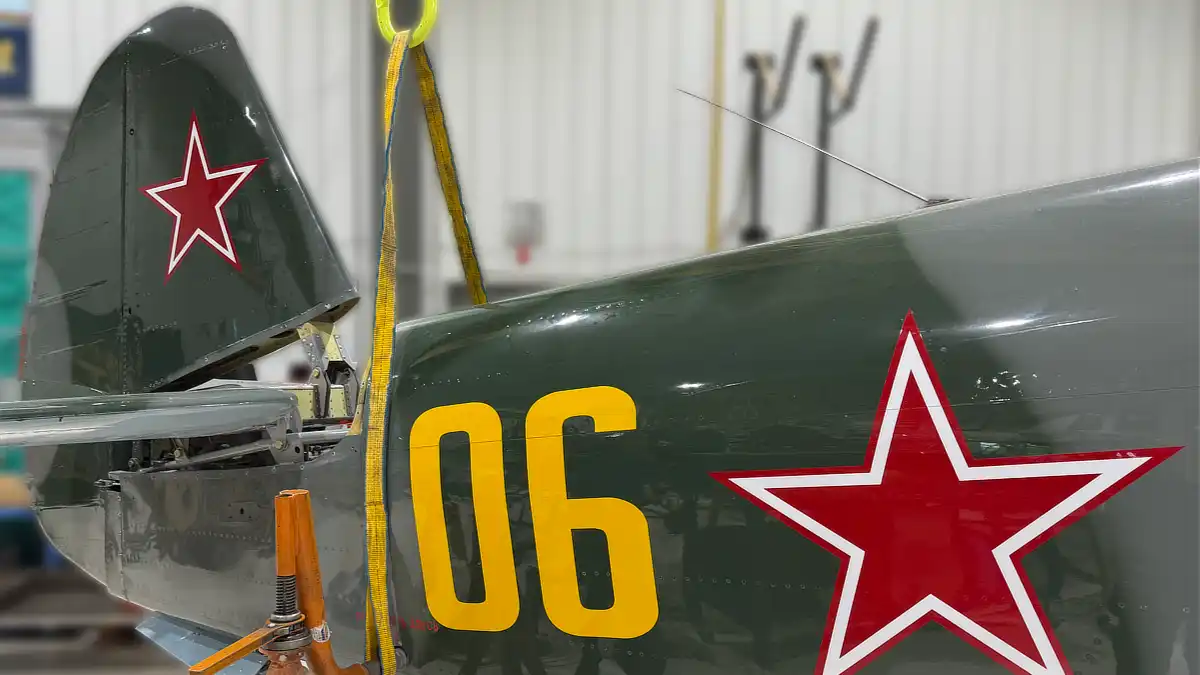
During COPA event it was offer to visit Vintage Wings hangar. There were a lot of interesting aircraft in the hangar for example Mustang, Spitfire etc. We were walking around, looking at aircraft on display, speaking with volunteers, then suddenly something flashed by.. something is really familiar… even something familiar from childhood.
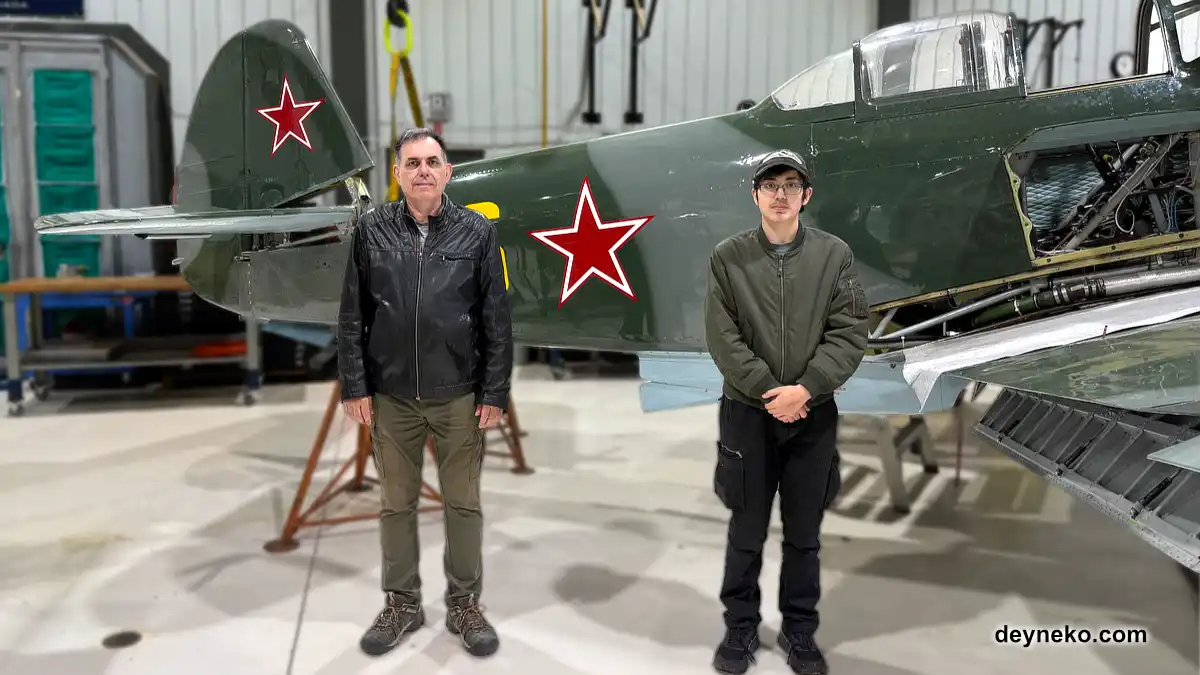
Although I started to look at that direction. At the back of the hangar it was – Big, Soviet Red Star on an aircraft tail! I see very familiar aircraft sihluette – no doubt – Yak! Not sure is it Yak-1, or Yak-3 but it is difinitely Yakovlev! I still didn’t believe how it possible to see a soviet WWII fighter between USA and British aircraft I showed it to my son, he recognised it momentarily too and we rush toward the Soviet aircraft. It’s not the first Soviet aircraft I’ve seen in Canada — the first was an An-2 — but this one is a real Soviet warbird!
What makes the Soviet Yak-9 fighter iconic?
The Role of the Yak‑9 in the Defeat of Nazi Germany
When people think of Soviet WWII fighters, they often remember the sharp little Yak-3 or the radial-engined La-5. But the real workhorse of the Yakovlev fighter family was the Yak-9. It entered combat in late 1942, just as the war in the East was reaching one of its most brutal turning points: Stalingrad.
It was not just another version of an existing fighter. The Yak-9 became a whole family of aircraft. Some versions were built for dogfighting. Others were built for long-range escort, reconnaissance, fighter-bomber work, or heavy cannon armament. In total, more than 16,000 Yak-9 fighters were built.
There is a useful Western comparison. In the Battle of Britain, the Spitfire became the icon, but the Hurricane carried much of the daily burden. The Yak-9 played a similar role on the Eastern Front. It may not always be the first Soviet fighter people name today, but it was one of the aircraft that did the hard, repeated, unglamorous work of the war.
And it earned respect for practical reasons: it was maneuverable, heavily adaptable, and easier to keep flying under rough front-line conditions.
Why the Normandie-Niémen Heroes Chose the Yak
Hope you know about Normandie-Neman heros – pilots from France… They are given a choice in what fighter they want to fight against German Nazi: a British Hurricane, an American Airacobra, a Soviet La-5 or a Yak. These French aces chose the Yak, and never looked back.
Lighter than a Spitfire” and praised its simplicity, maneuverability, and visibility — “the best visibility I had ever seen in a fighter.
Roland de la Poype, Second World War fighter ace and a member of the Normandie-Niemen fighter group
They flew it through some of the war’s hardest fighting and scored 273 confirmed kills — and they did it knowing the price of capture. Normandie-Niemen was such annoying for Nazis that in May 1943 the German high command ordered that any Normandie pilot taken alive be shot without trial, and their families in occupied France punished. When Stalin finally let them go home in 1945, they flew back to France in their Yaks.
When the Yak-9 Became a Flying Cannon
The Yak-9T carried a 37 mm cannon firing through the propeller hub. That alone made it a very serious weapon for a single-engine fighter. Then came the Yak-9K, armed with an even larger 45 mm NS-45 cannon.
This was no small upgrade. A 45 mm gun in a fighter was almost absurdly powerful. The recoil reached nearly seven tons, and engineers had to fit a muzzle brake to absorb much of the energy from each shot.
But there was a price. The 45 mm version did not become a mass-produced standard fighter. The gun was powerful, but not reliable enough for large-scale service. Only a small number of Yak-9K aircraft were built and used for military trials.
Yak-9 in Korea war
When we say Air war in Korea, our imagination immediately shows clashes Mig-15 vs F-86 Sabres. Few know that Korea Air war started when June 25, 1950 when two Yak‑9s executed a bomb‑and‑attack run on the South Korean airfield of Seul and 4 hours later six Nord Korean Yak-9 attacked aerodromes of Seul and Gimpo. At Seul aerodrome Yak-9 destroyed from 7 to 10 aircraft. Nord Korean pilot from 1st IAP on his Yak-9 has down C-54 from 374 транспортное авиакрыло USA above Seul aerodrome.
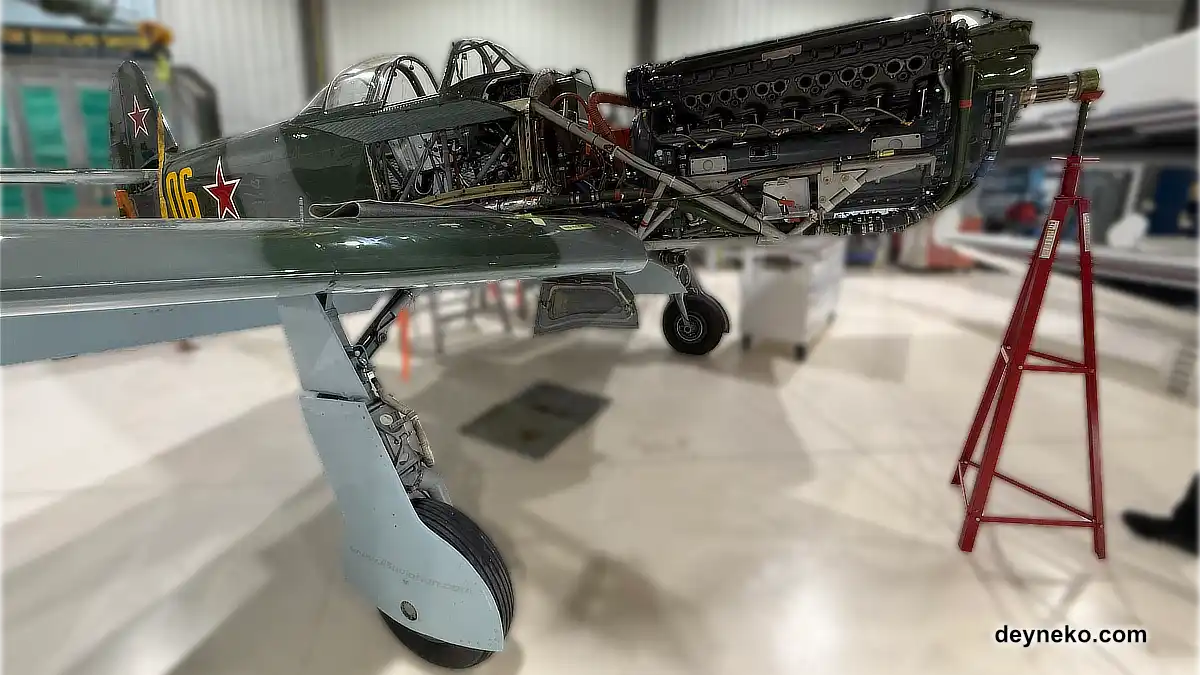
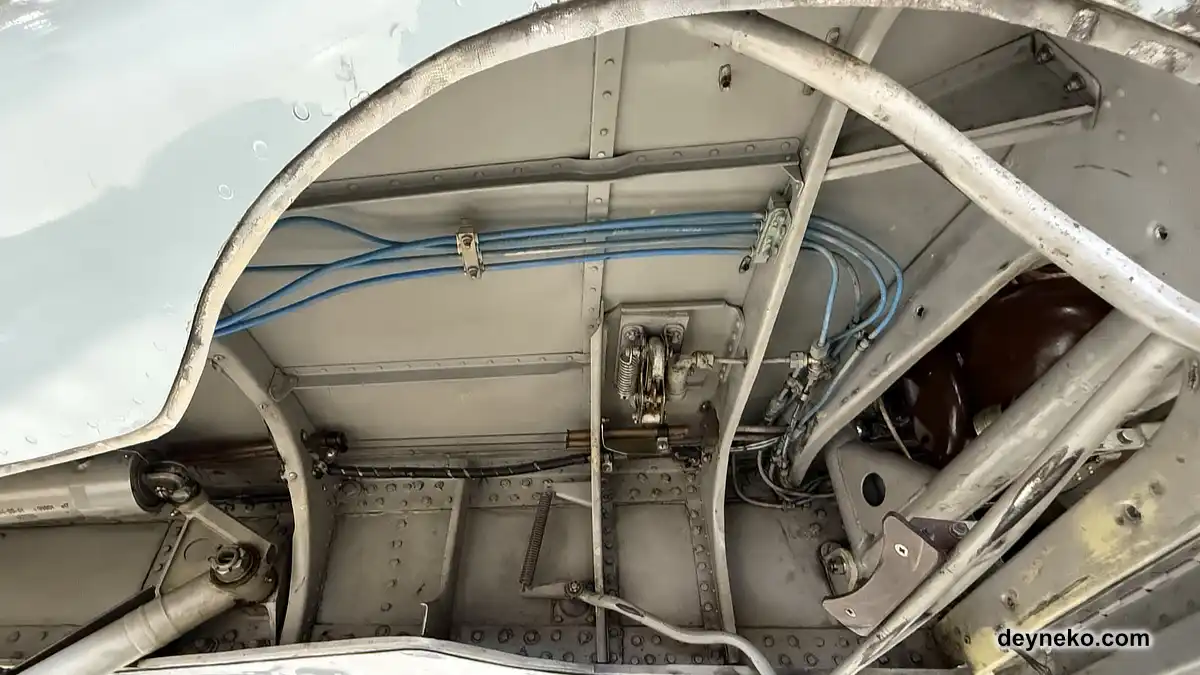
This is Yak-9 UM
Replica, Restoration, or Real Yak?
The aircraft we saw was a Yakovlev Yak-9UM. It is not a wartime fighter preserved exactly as it flew in 1944, but calling it simply a “replica” would also be too easy.
It is better described as a new-build / reconstructed Yak-9UM from a small post-Soviet production run. In the 1990s, the Strela factory in Orenburg, Russia, built a limited number of Yak fighters for the Western warbird market, using Yakovlev drawings and original tooling, but adapting them for modern civilian operation.
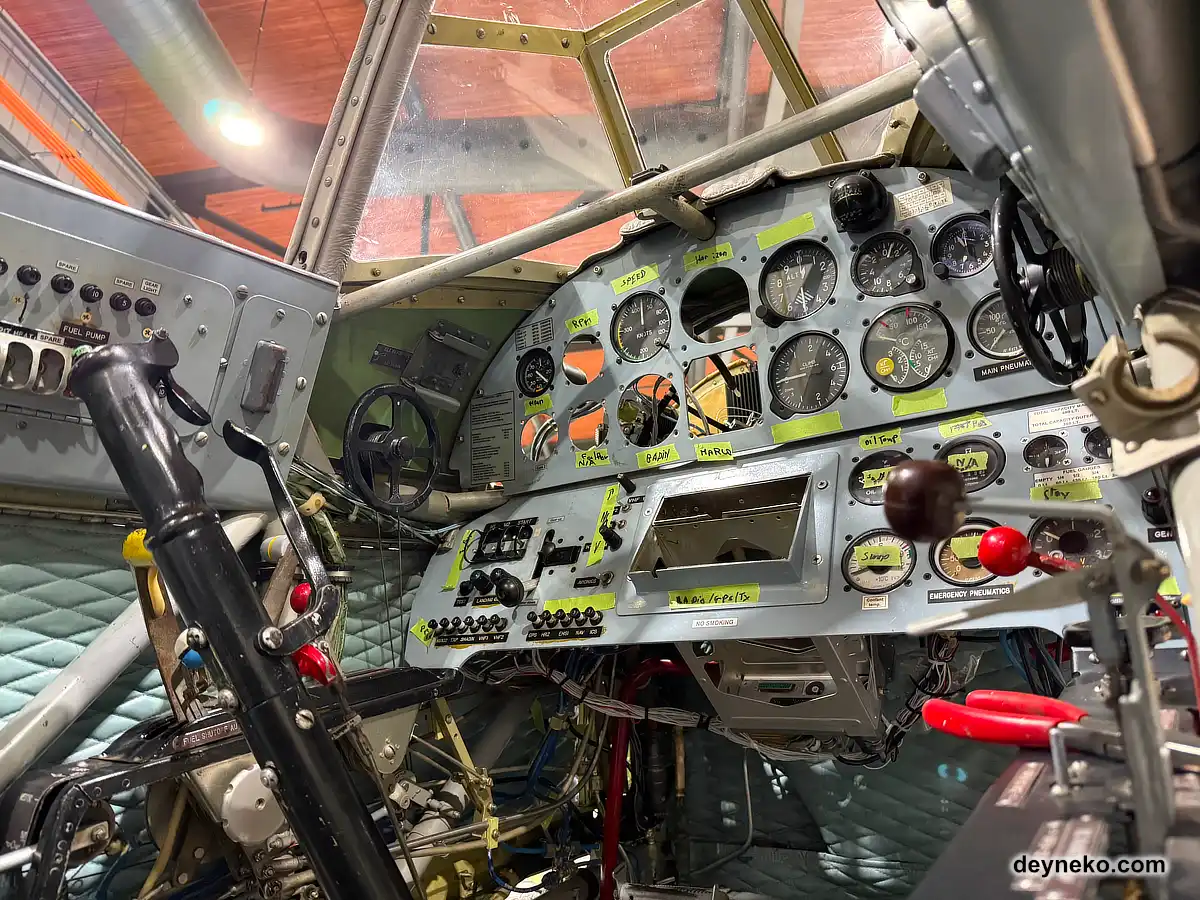
This particular aircraft appears to be c/n 0470406. Its history is unusually complicated: records link it to a wartime Yak-9U airframe reportedly shot down in 1943 and recovered decades later. Strela rebuilt it as a Yak-9UM.
After that, the aircraft began a long international life. It was assembled in Australia with an American Allison V-1710 engine and flew as VH-YXI in Soviet “White 17” colours. Later it went to the United States as N82112, then to Germany as D-FAFY / D-FAFA, where it was restored by MeierMotors around 2010.
In Switzerland, it became HB-RYA, wearing the yellow “06” markings, and was flown at European airshows by the Sion-based team 46 Aviation. In 2021 it returned to the U.S. registry as N16YK. In March 2026, that U.S. registration was cancelled and the aircraft was exported to Canada, where it is now being serviced by VinTech Aero at the Gatineau-Ottawa Executive Airport.
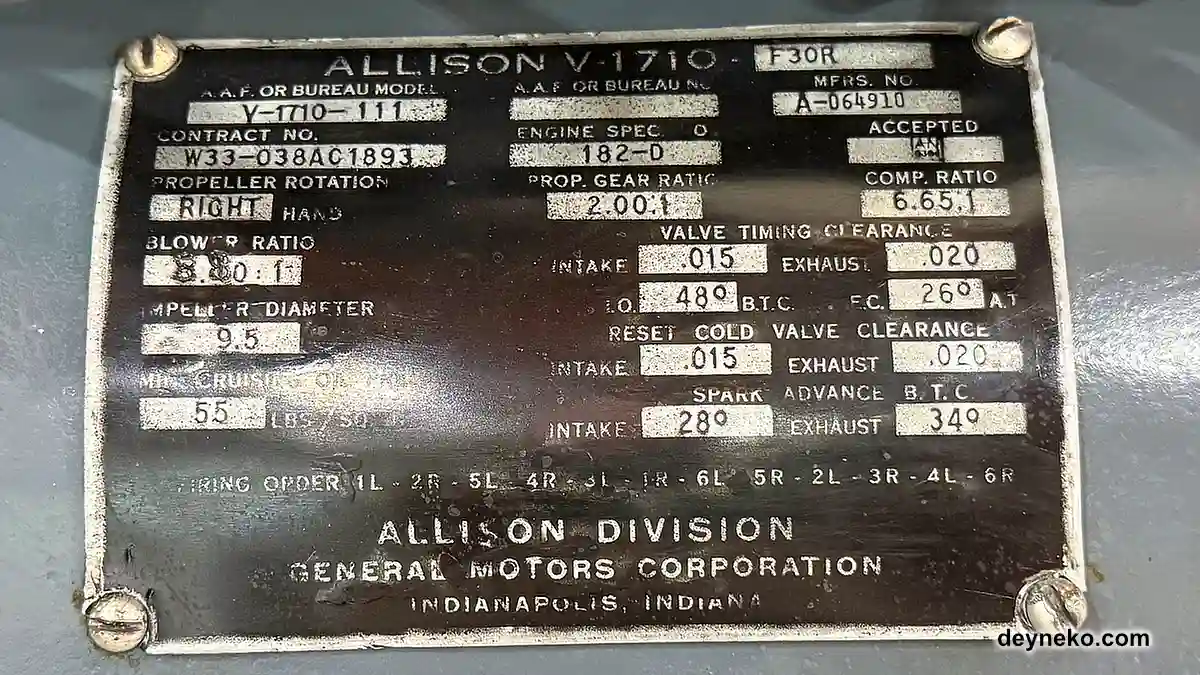
Why Does This Yak-9UM Have an Allison Engine?
The engine story adds another layer of irony.
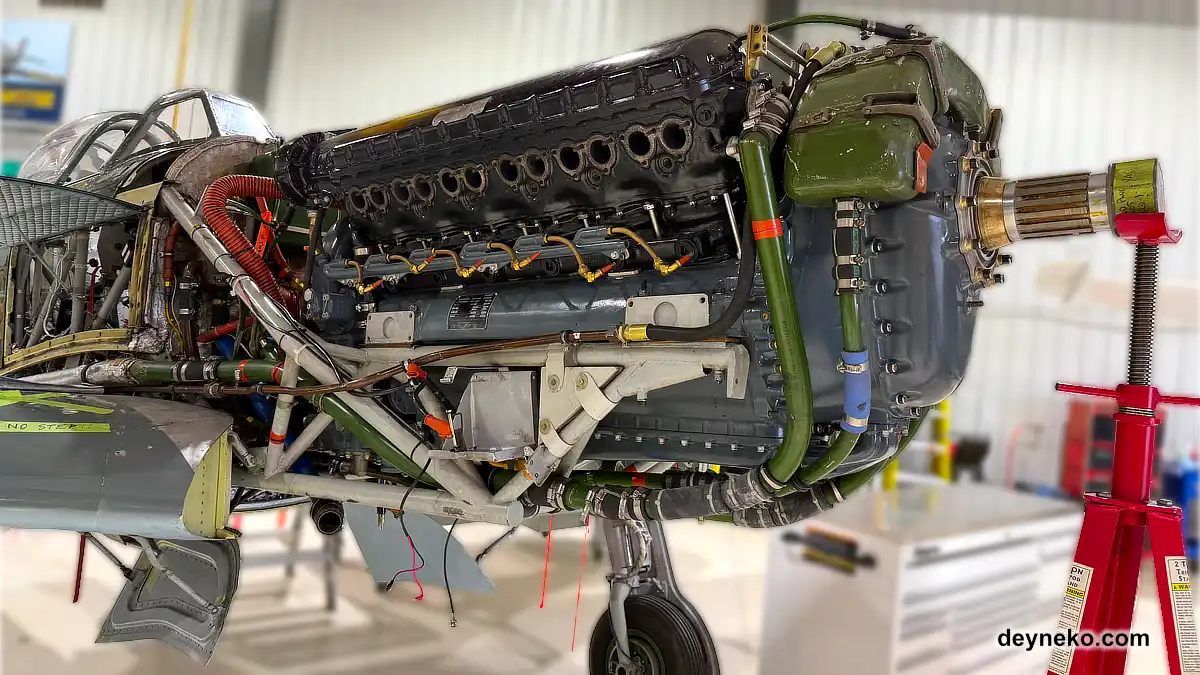
The wartime Yak fighters used Klimov engines. But the Klimov M-105 itself had French roots: it was a Soviet-developed version of the Hispano-Suiza 12Y, produced in the USSR under a French licence before the war.
So the original Yak was not a simple “closed Soviet machine.” Its engine lineage already crossed borders.
Then history repeated the joke in the jet age. The MiG-15, the symbol of Soviet jet power in Korea, flew with a Soviet-built descendant of the British Rolls-Royce Nene. And now this Yak-9UM, sitting in Canada decades later, carries an American Allison V-1710.
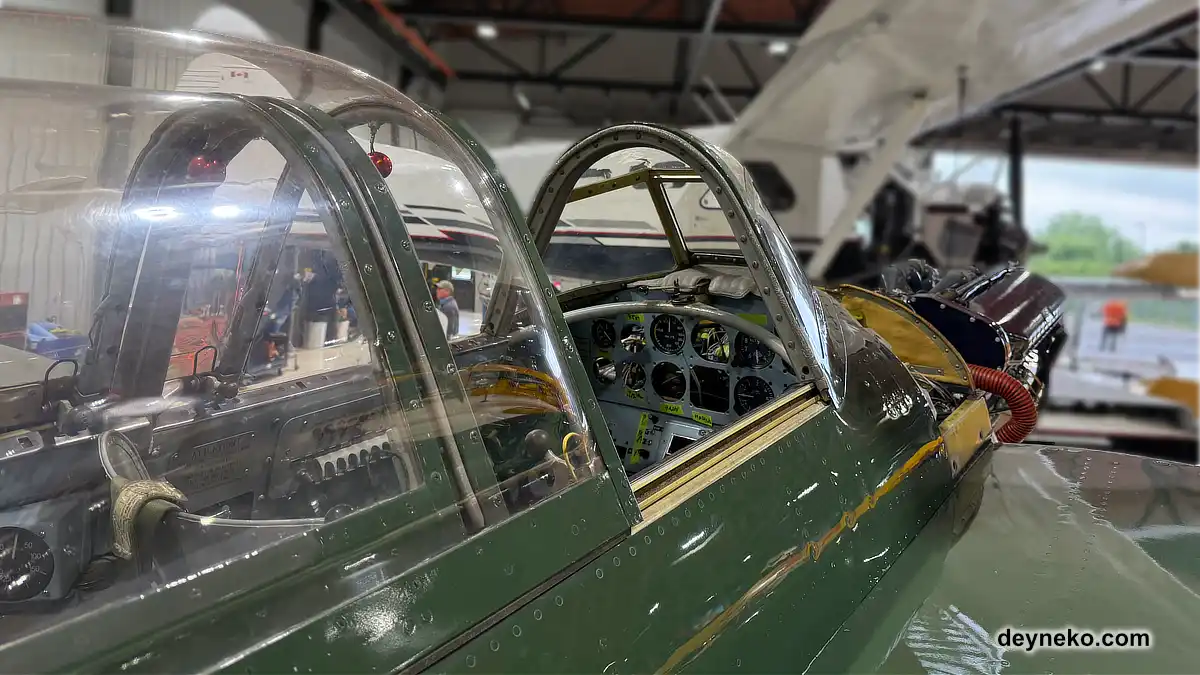
Why two seats.
The modern Yak-9UM was built with two seats for a simple reason: to make the aircraft usable for dual flying, training, and passenger rides. But this is not fantasy. During World War II, there was already a two-seat Yak-9V training version, with duplicated controls for pilot instruction.
In the Yak-9, the stories of different nations, different engines, and different wars are woven into one aircraft.
Sources and Further Reading
Books
- Yakubovich, N.V. The Yak-9 Fighter: A Distinguished Frontline Veteran. Moscow: Kollektsiya / Yauza / Eksmo, 2008. [In Russian] (45 mm cannon — p. 36)
- Yakubovich, N.V. The MiG-15 Fighter: Scourge of the “Flying Fortresses.” Moscow: Kollektsiya / Yauza / Eksmo, 2009. ISBN 978-5-699-34477-2. [In Russian] (purchase of the Rolls-Royce engines; the Mikoyan brothers — p. 7)
- Stepanets, A.T. Yak Fighters of the Great Patriotic War. Moscow: Mashinostroenie, 1992. [In Russian] (production total 16,769 — p. 111)
- Dybov, S.V. “Normandie-Niemen”: The True History of the Legendary Air Regiment. Moscow: Yauza / Eksmo, 2011. ISBN 978-5-699-46201-8. [In Russian] (the French choosing the Yak; 273 victories; the no-quarter order)
- Kotelnikov, V.R. Russian Aviation Piston Engines, 1910–2009. Moscow: Russian Foundation for the Promotion of Education and Science, 2010. ISBN 978-5-91244-017-5. [In Russian] (origin of the Klimov engine from the Hispano-Suiza)
- Lage, Manuel. Hispano-Suiza in Aeronautics: Men, Companies, Engines and Aircraft. SAE International, 2003. ISBN 978-0-7680-0997-2. (English-language source on the Hispano-Suiza → Klimov lineage)
- Seidov, Igor, and Stuart Britton. Red Devils over the Yalu: A Chronicle of Soviet Aerial Operations in the Korean War. Helion & Company, 2014.
Articles
- Nikolsky, M. Yakovlev’s Fighters: Yak-1, Yak-7, Yak-9, Yak-3. Aviation and Cosmonautics, 1999, nos. 5–6. [In Russian]
- In Memory of the French Squadron “Normandie-Niemen.” CyberLeninka (scholarly article). [In Russian] (Keitel’s order, May 1943)
Alexander Deyneko is a student pilot in the final stages of completing his Private Pilot Licence. Member of the Canadian Owners and Pilots Association (COPA). Has flown the Cessna 152 and 172 and the Schleicher ASK-21 glider, with familiarization flights in the historic Boeing Stearman PT-17 and Harvard Mk. IV. A former paragliding pilot-instructor certified by the Russian United Federation of Ultralight Aviation, where he also founded and ran a private paragliding club. Documentary filmmaker covering aviation subjects, with experience in aerial and 360° video production.
More about the author…